



Incident Lens
Monitor disruption signals and investigate the regions, ports, and routes involved.
Explore Incident LensDisruption Control, powered by Incident Lens
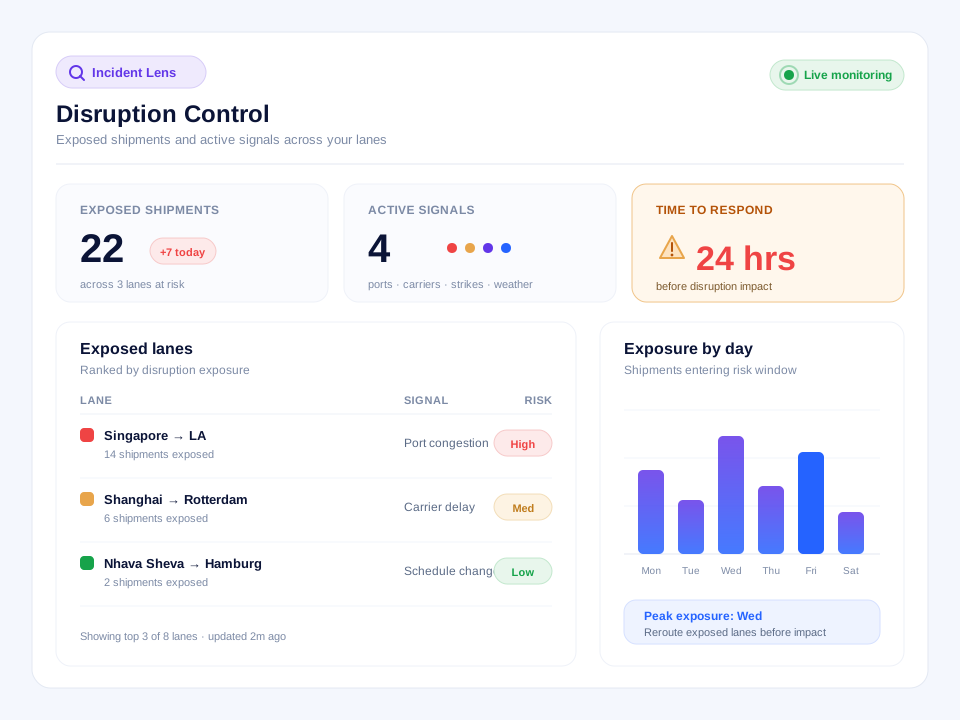
Connect congestion, strikes, schedule changes, and carrier reliability to exposed shipments, lanes, inventory, and customer commitments so teams have more time to respond.
See Disruption Control in action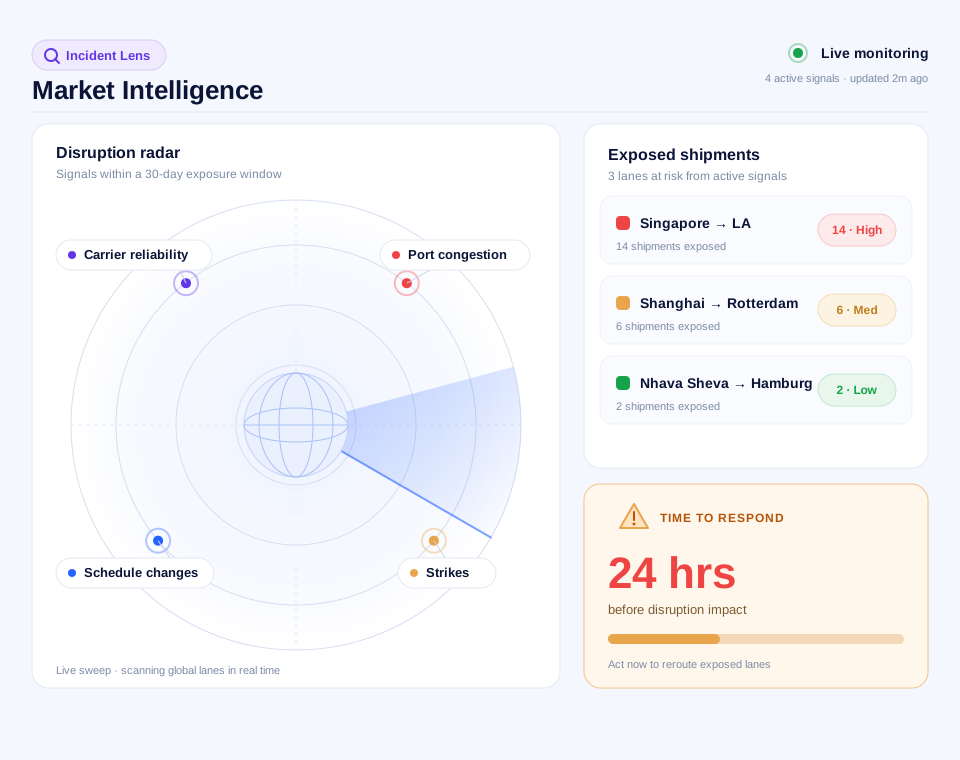
Trusted by global enterprises
Trusted by global enterprises














Connected across your logistics network
5000+ carrier integrations
Connected across your logistics network5000+ carrier integrations


Teams can see congestion, strikes, weather events, and schedule changes across multiple sources.
The harder part is knowing which events matter to their freight and what needs attention first.
Teams monitor news, carrier updates, port information, and forwarder messages to understand what is changing.
A disruption may affect one port or region, but teams still need to work out which shipments, lanes, and customer commitments are exposed.
Once an issue is identified, logistics teams have to find the affected shipments and determine who needs to act.
Communication often starts after the ETA has already changed or the shipment has already missed a milestone.
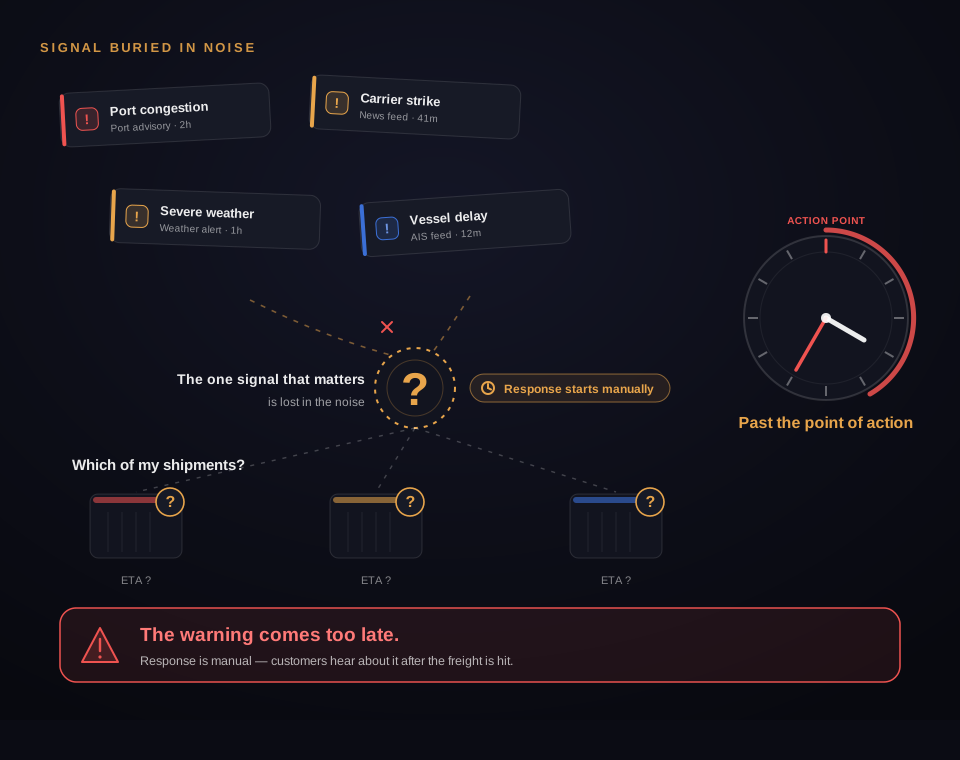
GoComet connects external events with the freight actually exposed to them so teams act before a disruption becomes a shipment delay.
Start with the freight that could be affected, not a generic disruption feed.
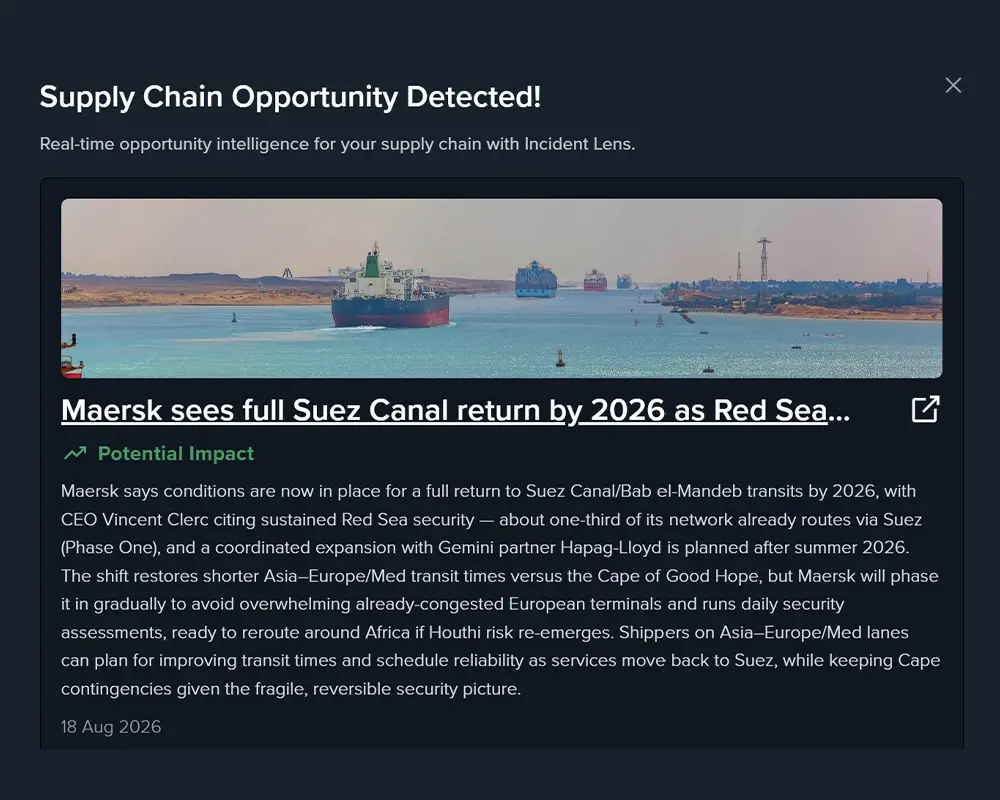
Start with the freight that could be affected, not a generic disruption feed.
Follow a disruption signalNova combines external disruption data with your priority lanes, customers, carriers, thresholds, and escalation structure. It helps make sure the relevant disruption reaches the right team with the freight context needed to respond.
There’s congestion in Shanghai. Which of our shipments are exposed, and do we need to reroute?
See global incidents, where congestion is building, the sailings available around an affected movement, and how carriers actually perform.
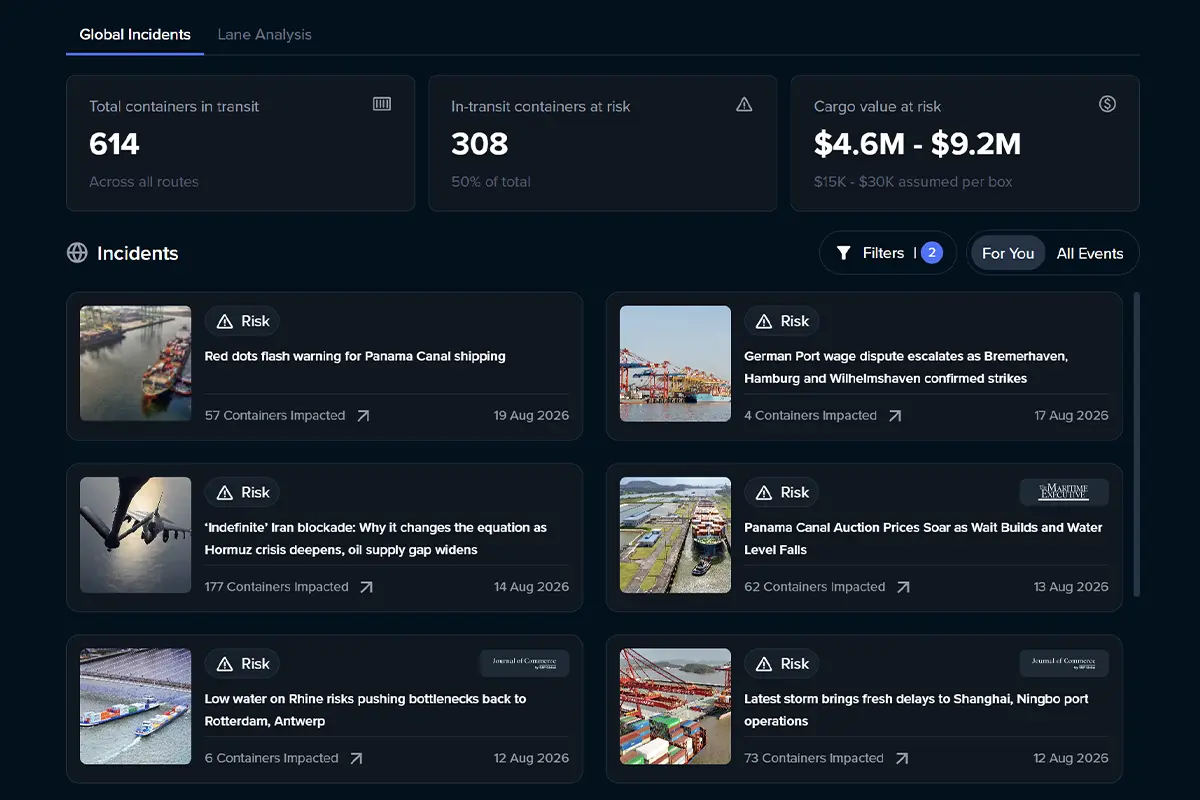
Monitor relevant geopolitical events, labour disruption, severe weather, infrastructure issues, and other freight-impacting incidents.
OutcomeSpend less time searching multiple sources for disruption information.
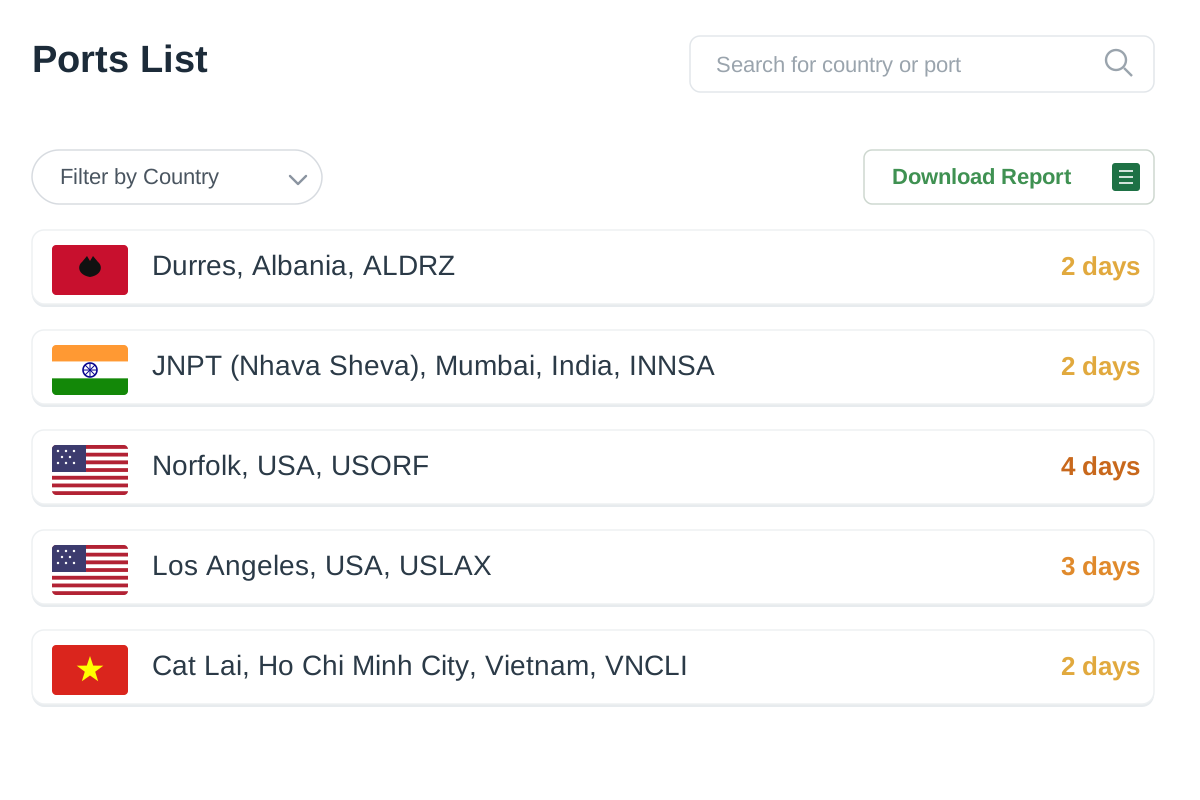
Review congestion and delay conditions at relevant origin, transshipment, and destination ports.
OutcomeSee potential port exposure before it becomes a shipment exception.
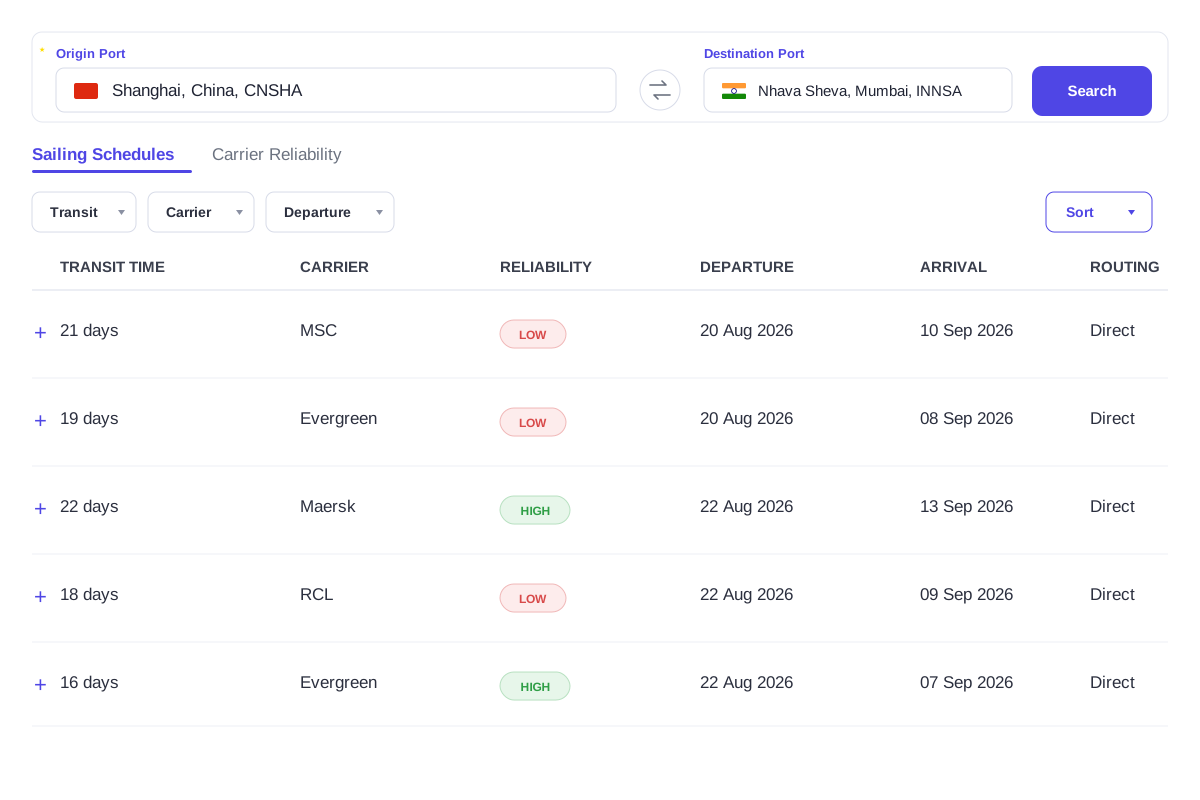
Review sailing schedules, departures, arrivals, transit times, and routing options when the current movement plan is at risk.
OutcomeGive teams more context when considering alternatives.
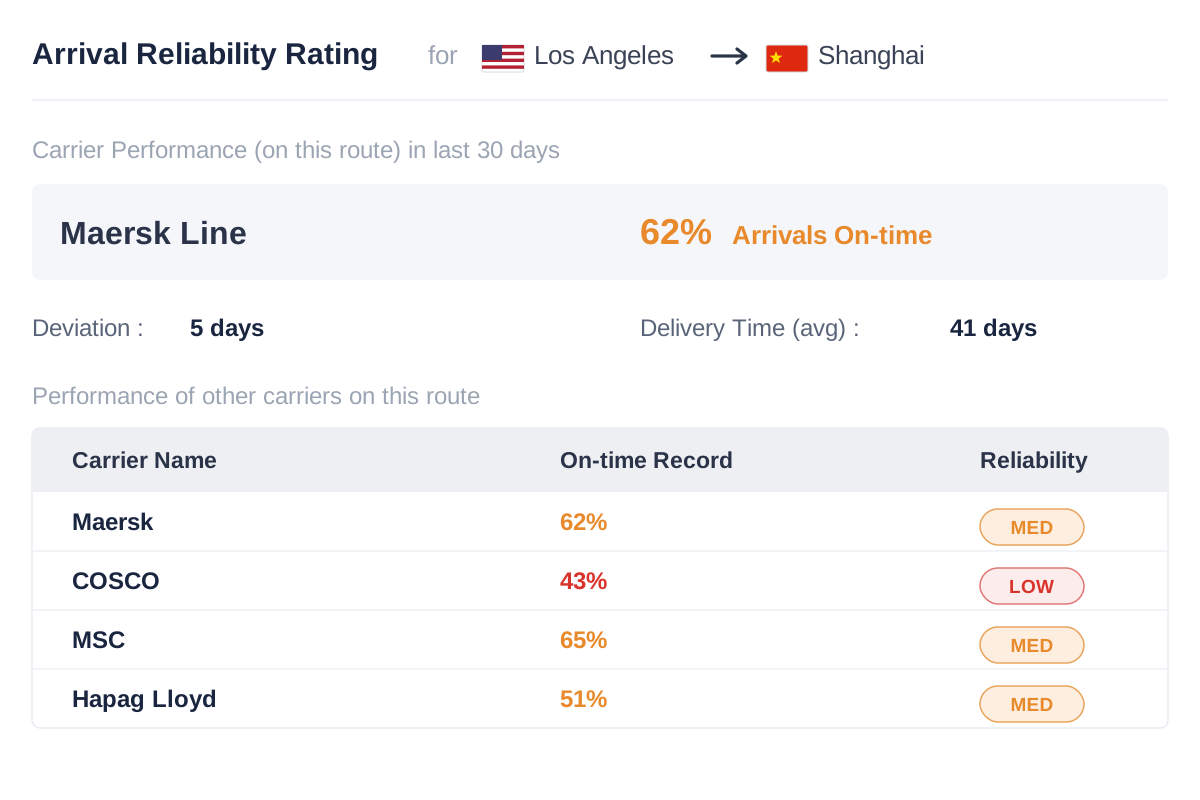
Compare carrier and lane performance when evaluating the likely impact of a disruption or an alternative movement.
OutcomeUse performance context instead of carrier reputation alone.
Monitor disruption signals and investigate the regions, ports, and routes involved.
Explore Incident LensReview current congestion and delay conditions across global ports.
Check Port CongestionReview schedules, transit times, routing options, and carrier context across origin and destination pairs.
Search Smart SchedulesUse historical lead-time context when reviewing routing and carrier alternatives.
Compare Lead TimesEach tool provides a signal. Disruption Control connects those signals to the freight and commitments that matter to your operation.

Use port, schedule, and disruption context when deciding what should move and when.
Powered by GoOrdersExplore more
Use carrier reliability and route context when evaluating freight partners.
Powered by GoProcureExplore more
Turn a changed movement plan into the required document, partner, and workflow actions.
Powered by GoShipment + DRDVExplore more
Connect external disruption signals with active shipments and movement exceptions.
Powered by GoTrackExplore moreIdentify external events and connect them with exposed freight.
Powered by Market Intelligence + Incident LensExplore more
Use disruption and movement context when reviewing unusual freight or accessorial charges.
Powered by GoInvoiceExplore moreDisruption intelligence becomes context for planning, movement, procurement, and payment decisions.
Explore the Freight Control EngineConfigure Disruption Control around the lanes, ports, customers, carriers, and shipments that matter most to your operation.
Configure around
What changed, which freight could be affected, and who needs to know?
What response is required before the disruption becomes a delay?
Freight Disruption Control connects external events such as congestion, strikes, schedule changes, and other disruptions with the shipments, lanes, carriers, and commitments they could affect.
Shipment tracking tells you what is happening to an active shipment. Disruption Control looks at external events that could affect the shipment before the impact appears as a milestone or ETA change.
Incident Lens is GoComet's disruption intelligence capability for identifying global events that may affect freight movement and providing context around the affected location or network.
Relevant signals can include port congestion, labour strikes, severe weather, infrastructure disruption, schedule changes, and other events that may affect freight movement.
Disruption Control is designed to connect relevant external signals with shipment, port, route, carrier, and timing context so teams can determine which active freight may be affected.
Yes. GoComet's Port Congestion intelligence provides port-delay context that can support disruption review and movement planning.
Smart Schedules provides sailing and routing information that teams can use when reviewing available movement options for a lane.
Yes. Lead-time and carrier-performance context can help teams evaluate the reliability of alternative carriers or routes when reviewing a response.
Disruption Control provides the signals and freight context required to review alternatives. The final routing or operational decision remains with the logistics team.
Disruption Control provides external risk context, while GoTrack provides the live movement context of the shipment. Together, teams can understand both what could affect the shipment and what is currently happening to it.
Bring a lane, port pair, or set of active shipments that regularly faces disruption. We will show how Disruption Control connects congestion, schedules, carrier reliability, and external events with the freight and customer commitments they could affect.
One lane and a few active shipments are enough to begin.